Screen Printing vs DTG vs Embroidery for Company T-Shirts: Which Printing Method Should Your Business Choose?
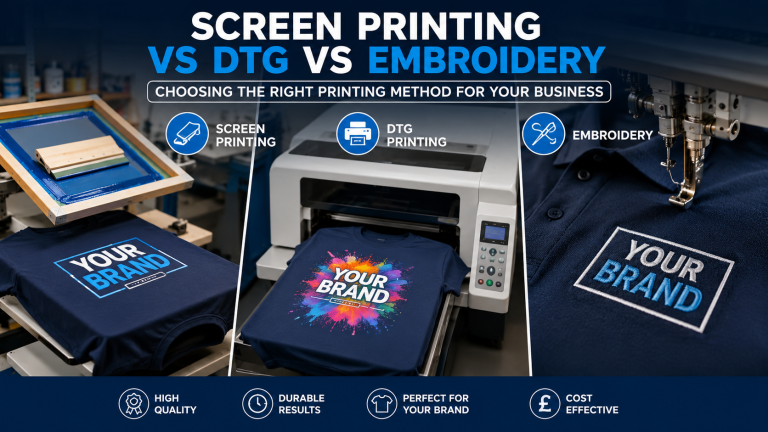
Choosing the right T – shirt printing UK solution can have a major impact on how your brand is represented. Whether you are ordering clothing for employees, promotional campaigns, corporate events, exhibitions or customer giveaways, the printing method you select affects the quality, durability, appearance and overall value of your branded clothing.
Many UK businesses ask the same questions before placing an order: Is screen printing better than DTG? Are embroidered company T-shirts more professional?
What is the best printing method for company T-shirts?
The answer depends on your business goals, order quantity, design requirements and how you plan to use your branded garments. A method that works perfectly for a large promotional event may not be the best choice for premium staff uniforms or detailed brand artwork.
In this guide, we compare three of the most popular T-shirt printing methods — screen printing, DTG (Direct-to-Garment) printing and embroidery — to help UK businesses choose the right option for their custom t shirt printing UK requirements.
Why Choosing the Right T-Shirt Printing Method Matters for Businesses
Branded clothing is more than just a uniform or promotional item. A well-designed company T-shirt acts as a moving advertisement, helping businesses increase visibility and create a consistent professional image.
For companies investing in corporate t shirt printing, selecting the correct branding method is important because different techniques offer different advantages.
- Screen printing is ideal for businesses ordering larger quantities with simple and bold designs.
- DTG printing works well for detailed artwork, multiple colours and smaller order quantities.
- Embroidery provides a premium finish suitable for professional uniforms and corporate clothing.
The right printing method helps ensure your logo remains clear, your garments look professional and your investment delivers long-term value.
Whether you need branded t shirts UK for employees, promotional merchandise or business events, understanding the difference between printing techniques makes the buying decision easier.
What Is Screen Printing?
Screen printing is one of the most traditional and widely used methods for custom printed T-shirts. This technique involves transferring ink onto fabric through a prepared mesh screen that contains the required design.
Each colour within the artwork is applied separately, creating a strong and vibrant print that works especially well for business logos, slogans and promotional designs.
How Screen Printing Works
The screen printing process begins by creating a separate screen for each colour in the design. Ink is then pushed through these screens onto the T-shirt fabric, building the final artwork layer by layer.
Because the setup process is more efficient for larger quantities, screen printing is commonly chosen by businesses requiring bulk branded T-shirts for campaigns, events and promotions.
Benefits of Screen Printing for Businesses
Cost-effective for large orders: One of the biggest advantages of screen printing is affordability when ordering higher quantities. The more garments you produce, the lower the cost per item usually becomes.
Durable and long-lasting: Screen printed designs are known for their excellent durability. The ink bonds strongly with the fabric, making them suitable for clothing that will be worn regularly.
Excellent colour impact: Screen printing creates bold and vibrant designs, making it ideal for companies that want their logo or message to stand out.
Reliable for promotional campaigns: Many businesses choose screen printing for exhibitions, trade shows, charity events and marketing campaigns where large quantities of branded clothing are required.
When Should You Choose Screen Printing?
Screen printing is the right choice for businesses that:
- Need large quantities of promotional T-shirts.
- Have simple logos or bold artwork.
- Want affordable branding for marketing campaigns.
- Require durable prints for regular use.
- Need cost-effective promotional t shirts UK solutions.
For businesses ordering hundreds of garments, screen printing remains one of the most practical and economical options.
What Is DTG (Direct-to-Garment) Printing?
DTG printing, also known as Direct-to-Garment printing, is a modern digital printing technique where artwork is printed directly onto the fabric using specialised ink technology.
Unlike screen printing, DTG does not require separate screens for different colours. This allows businesses to create detailed designs with complex artwork, gradients and photographic elements.
How DTG Printing Works
DTG printing works similarly to a traditional digital printer. The garment is placed into the printing machine, and the design is applied directly onto the T-shirt surface.
This process allows businesses to create highly detailed designs without the setup requirements associated with traditional printing methods.
Benefits of DTG Printing
Perfect for detailed designs: DTG is an excellent choice for businesses with complex logos, illustrations, photographs or colourful artwork.
Ideal for smaller quantities: Since DTG requires less preparation, it is suitable for businesses that need smaller batches or personalised garments.
Greater design flexibility: Businesses are not limited by the number of colours in their design, making DTG suitable for creative branding projects.
Quick customisation: Digital printing allows businesses to create unique designs without lengthy setup processes.
When Should Businesses Choose DTG?
DTG printing is suitable for businesses that:
- Need full-colour artwork.
- Require detailed or photographic designs.
- Want smaller order quantities.
- Need flexible customisation options.
- Are creating unique promotional clothing.
For companies looking for creative custom company T-shirts, DTG provides excellent design flexibility.
What Is Embroidery for Company T-Shirts?
Embroidery is a premium branding technique where a logo or design is stitched directly into the fabric using coloured threads.
Unlike printing methods that apply ink onto clothing, embroidery creates a raised and textured finish that gives garments a professional appearance.
This method is commonly used for embroidered company T-shirts, uniforms, polos, jackets and premium corporate clothing.
How Embroidery Works
The embroidery process converts a digital logo file into stitching instructions. Specialised machines then recreate the design using different coloured threads.
The result is a durable and professional-looking finish that can withstand regular washing and everyday wear.
Benefits of Embroidered Company Clothing
Premium professional appearance: Embroidery creates a high-quality finish that works especially well for businesses wanting a smart and reliable brand image.
Excellent durability: Since the design is stitched into the fabric, embroidered branding can last for years when properly maintained.
Ideal for uniforms: Many industries choose embroidery because it provides a consistent and professional appearance for employees.
When Should You Choose Embroidery?
Embroidery is the ideal choice for businesses that want a premium and professional finish for their branded clothing. It is especially suitable for companies that use T-shirts as part of their staff uniform or corporate identity.
You should consider embroidery if your business:
- Requires professional-looking staff uniforms.
- Wants a premium alternative to printed logos.
- Needs long-lasting branding for regular use.
- Operates in industries where appearance and trust are important.
- Requires durable corporate clothing solutions.
For businesses that want their team clothing to represent quality and professionalism, embroidered branding is a strong choice.
Screen Printing vs DTG vs Embroidery: Complete Comparison Guide
When choosing between screen printing, DTG and embroidery, businesses should consider several factors including budget, order size, artwork style and how the clothing will be used.
Each printing method has its own advantages, and the best option depends on your specific branding requirements.
Cost Comparison
Cost is one of the biggest factors when choosing a T-shirt printing method.
Screen printing is generally the most cost-effective choice for large orders. Businesses ordering hundreds or thousands of promotional garments can benefit from reduced pricing per item.
DTG printing can be more suitable for smaller quantities because it requires less setup. This makes it a practical option for start-ups, small businesses and limited campaigns.
Embroidery is usually considered a premium branding option because of the detailed stitching process. However, the professional finish and durability can provide excellent long-term value.
Durability Comparison
Durability is important for businesses investing in branded T-shirts UK, especially when garments are worn frequently by employees.
Screen printing: Provides excellent durability and works well for promotional clothing that needs to maintain its appearance after repeated use.
DTG printing: Produces high-quality designs, but garments should be cared for correctly to maintain print quality over time.
Embroidery: Offers outstanding durability because the branding is stitched directly into the fabric.
Design Flexibility Comparison
The complexity of your design plays an important role in selecting the right printing method.
- Screen Printing: Best for simple logos, text, bold graphics and designs with limited colours.
- DTG Printing: Best for detailed artwork, photographs and full-colour designs.
- Embroidery: Best for simple professional logos and premium branding.
Businesses should always consider how their logo will appear on the garment before selecting a printing technique.
Best Option Based on Order Quantity
The number of T-shirts you need can influence the most suitable printing method.
Large quantity orders: Screen printing is often the preferred option for businesses requiring bulk promotional clothing.
Small quantity orders: DTG provides flexibility without requiring large minimum quantities.
Professional staff clothing: Embroidery is often the preferred option for businesses that need durable and premium branding.
Which T-Shirt Printing Method Is Best for UK Businesses?
There is no single printing method that is perfect for every business. The right choice depends on your goals, budget and how you want your branded clothing to represent your company.
Best Choice for Promotional Events
For exhibitions, conferences, charity events and marketing campaigns, screen printing is often the most practical option.
Businesses attending events usually require a large number of garments at an affordable price while maintaining strong brand visibility.
Best Choice for Staff Uniforms
For employee clothing and professional uniforms, embroidery is often the preferred choice.
Industries such as hospitality, retail, construction and service businesses benefit from embroidered logos because they create a smart and trustworthy appearance.
Best Choice for Creative Branding Campaigns
Businesses running creative marketing campaigns may prefer DTG printing because it allows detailed artwork and vibrant designs.
This makes it suitable for brands that want their clothing to make a strong visual impact.
Industries That Use Custom Printed Company T-Shirts
Custom printed T-shirts are used by businesses across many industries throughout the UK. They help companies create brand awareness, improve team recognition and promote their services.
Events and Marketing Companies
Event organisers and marketing teams often use branded T-shirts for exhibitions, product launches and promotional campaigns.
Printed clothing helps teams look professional while increasing brand visibility among attendees.
Hospitality Businesses
Restaurants, cafés, hotels and catering businesses use branded clothing to create a consistent customer experience.
Professional uniforms help customers easily identify staff members while strengthening brand recognition.
Construction and Trade Businesses
Construction companies, electricians, plumbers and trade professionals often use branded workwear to promote their services while working on-site.
Durable printing and embroidery options help maintain a professional image in demanding environments.
Retail and Customer Service Teams
Retail businesses use company T-shirts to create a consistent appearance across their teams and improve customer interaction.
Sports Teams and Community Groups
Sports clubs, schools and community organisations use customised clothing to build team identity and create a sense of belonging.